Hey guys, if you’re here, chances are you’re staring at a Xcmg loader that’s acting up — maybe the hydraulic pump’s whining, the bucket pins are shot, or the electrical control module’s throwing weird codes — and you know you need a specific part, but scrolling through random online shops just left you more confused. As a Xcmg loader parts supplier who’s spent 7 years working directly with owners, mechanics, and shop foremen, I get it: finding the right part isn’t just about matching a number — it’s about not wasting money on generic junk, not waiting 2 weeks for a wrong part, and not messing up your loader’s performance. Let’s break this down step by step, no corporate fluff, just real stuff that works. Xcmg Loader Parts

First, stop guessing and start digging for your loader’s serial number. I can’t tell you how many people message me saying “I have an Xcmg 5-ton loader” and can’t answer anything else. The serial number is the golden key here. For most Xcmg loaders (whether it’s the ZL50GN, LW300FN, LW600KV), you’ll find it stamped on a metal plate on the right-side frame rail, near the front axle, or sometimes inside the cab on the driver’s side door jamb. It’s usually a mix of letters and numbers — like LW500KVT12345 — and it tells you exactly what model year, variant, and even sub-spec your loader is. A part that fits a 2018 ZL50GN won’t always fit a 2022 ZL50GN, even if they look identical on the outside. I’ve seen guys buy a new bucket cylinder seal kit for their 2019 loader, only to find the cylinder’s port size changed in 2021, so it leaked like a sieve. Serial number solves that right away.
Next, don’t rely on the part name alone. “Hydraulic hose” is way too vague. If you message me asking for a hydraulic hose, I’ll ask 10 follow-ups: What’s the length? Is it high-pressure for the boom or return line? What’s the end fitting size — 12mm or 16mm? Is it reinforced for excavator or loader use? Most part names online are generic, so you need specific details. Grab a tape measure for hoses, cylinders, and pins; check the fittings with a caliper if you have one; and snap close-up photos of the part you’re replacing. Worn-out parts have numbers stamped on them too — like a bearing’s part number, or a gear’s tooth count. That stamped number is non-negotiable for small, precision parts, like engine valves or brake calipers. I had a farmer last week who almost bought a wrong brake pad because he just said “Xcmg ZL50 pads” — when he sent a photo of the old pad’s stamped part number, it turned out his loader was a 2020 model that used a slightly different pad than the 2015 version everyone was selling.
Now, vet your supplier — and yes, I’m biased, but I’ll be honest: not all Xcmg parts are equal. A lot of online sellers market “Xcmg-compatible” parts that are knockoffs made in factories that don’t follow Xcmg’s specs. For example, a fake hydraulic pump might have thinner metal housings that crack under heavy load, which can damage your entire hydraulic system and cost way more to fix than a real part. What to look for? First, ask if the supplier sells genuine Xcmg OEM parts or high-grade aftermarket parts that meet Xcmg’s original engineering standards. We sell both: OEM parts straight from Xcmg’s authorized distributors, and aftermarket parts tested to match OEM specs by our in-house team of mechanics. Second, ask if they can cross-reference your old part number or serial number on their end — a good supplier will have a system to pull that info, not just Google it. We keep a database of every Xcmg loader model from the last 15 years, so when someone sends us a serial number, we can tell them exactly what parts fit, no guesswork. Third, check their return policy. If a supplier won’t take back a wrong part, that’s a red flag. We offer a 30-day return on unused parts, because we know mistakes happen — and we’d rather get a wrong part back than leave a customer stuck with it.
Wait, what if you have an older loader that’s no longer in production? Xcmg stopped making some ZL models back in the 2000s, and a lot of suppliers act like those parts are impossible to find. But here’s the thing: even for older models, there are still parts that are cross-compatible with newer models, as long as you have the serial number and part details. Last month, a guy had a 2007 ZL400 loader that needed a new transmission input shaft. Instead of a $800 OEM part that would take 6 weeks to ship, we found a high-grade aftermarket shaft that matched all his specs, for $350, and it works exactly the same. The key here is not to settle for generic, but to find a supplier who works with cross-referencing for older models, not just saying “we don’t carry that.”
Also, avoid the mistake of buying the cheapest part. I see this all the time: a guy buys a $10 hydraulic filter instead of a $15 one, and 2 months later, the filter clogs, the hydraulic system overheats, and he has to replace $2,000 worth of parts. Cheap parts often skip critical specs — like the pressure rating on hoses, or the material strength on pins. For loaders, which work in tough conditions (construction sites, farms, mines), you want parts that are made to hold up. That doesn’t mean you have to overpay, but it does mean you should balance price with quality. We price our parts competitively, but we won’t sell a part that we wouldn’t use on our own loaders.
Let me walk you through a real example of how this works. Last week, a customer who runs a small construction company messaged us saying his LW300FN loader was having trouble lifting heavy loads, so he needed a new lift arm pin. First, he sent us the serial number: LW300FNM08765. We looked that up in our database and confirmed it’s a 2017 model, 3-ton loader. Then, he sent a photo of the old pin, which had a stamped number: 40mm x 220mm. We checked our stock, pulled the matching OEM pin, and shipped it out the same day. A few days later, he sent us a message saying it fit perfectly, and his loader was back to work. That’s the process — no guesswork, no wrong parts, just the right part for his specific machine.
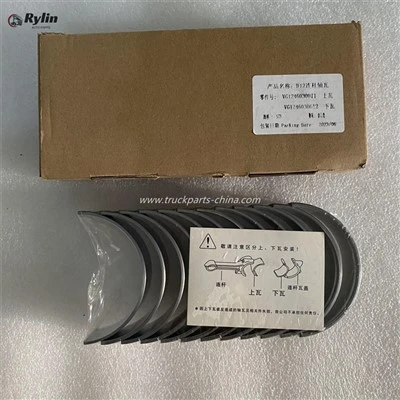
So to recap the key steps to find the right Xcmg loader part: 1. Find your loader’s serial number (stamped on the frame or cab) — that’s your main ID. 2. Collect specific details: part measurements, stamped numbers, and photos of the old part. 3. Vet your supplier: ask about OEM vs aftermarket, cross-referencing, and return policies. 4. Skip the super cheap parts — prioritize quality for loader parts that take a beating.
Sinotruk Truck Parts If you’re still stuck, whether you can’t find a part number, have an older loader, or just want to double-check what you need, hit me up. I’d be happy to help you make sure you get the right part, no hassle, no wasted money.
References
- Xcmg Official Parts Catalog: Loader Model Compatibility & Serial Number Lookup
- Construction Equipment Maintenance Association (CEMA) Best Practices for Heavy Machinery Part Sourcing
- ISO 9001:2015 Standards for Aftermarket Heavy Equipment Parts Manufacturing
Jinan Rylin Auto Parts Co., Ltd.
As one of the most professional xcmg loader parts manufacturers and suppliers in China, we’re featured by high quality original auto parts. Please feel free to buy premium xcmg loader parts at competitive price from our factory. Good service and punctual delivery are available.
Address: Quanli Auto Parts Mall, Sushan Road, Yaoshan Street, Tianqiao District, Jinan, Shandong
E-mail: mike@jnsoeon.com
WebSite: https://www.truckparts-china.com/
