If you’ve spent any time working with compression springs—whether in automotive manufacturing, medical device assembly, industrial machinery, or even everyday consumer goods—you know that not all springs are created equal. Most people default to straight-cylindrical compression springs, the kind that look like a uniform metal coil with the same outer diameter from end to end. But there’s a specialized variant that solves problems straight springs can’t, and that’s what I want to break down today: the hourglass compression spring. Compression Springs
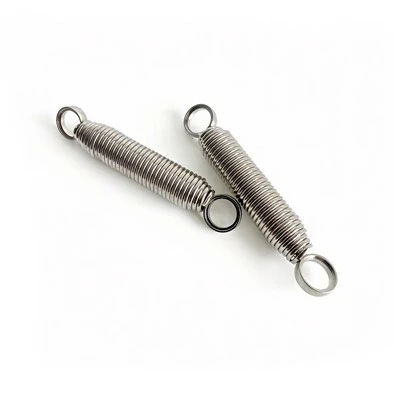
As a compression spring supplier with 12 years in the game, I’ve seen every type of spring under the sun, and I can’t tell you how many times a client has come to us frustrated because their straight spring kept buckling, binding, or failing to deliver consistent force when compressed. That’s almost always the result of a misapplied straight spring, and in a lot of cases, an hourglass spring is the perfect replacement. Let’s start with the basics, no jargon overload I promise.
An hourglass compression spring—sometimes called a concave spring, or barrel spring depending on the taper direction, though hourglass is the most common term for the waisted, narrow-middle design—has a distinct profile that sets it apart from its straight counterpart. Instead of having a constant outer diameter (OD) along its entire length, it tapers inward at the center section, then flares back out to its original OD at both ends. If you hold it side-by-side with a straight spring of the same overall length and same end OD, the middle of the hourglass spring will be noticeably skinnier, like the shape of an hourglass that gives it its name.
Wait, but why shape matter? When you compress a straight spring, the coils have to move inward as the spring gets shorter, right? That’s where buckling comes from. Imagine a metal ruler: if you push down on the middle of a straight ruler held at both ends, it bends. A straight compression spring does that same thing when compressed beyond a certain point, especially if it’s long compared to its diameter (we call that slenderness ratio in the spring world, and it’s a key factor in failure). When it buckles, it doesn’t compress evenly, it binds against the sides of the bore it’s sitting in, it delivers inconsistent force, and often breaks prematurely from the stress that uneven bending causes.
The hourglass shape fixes that core problem. The narrow middle section gives the coils room to expand outward as the spring compresses, instead of forcing them to press inward and buckle. That’s the science bit, simplified. Let’s get a little more technical for anyone who wants to dive deeper: the taper of the hourglass is engineered so that as the spring compresses, the distance between the coils gradually increases (wait, no—wait, when the spring is uncompressed, the coils are close together, and as you compress it, they get closer, right? Wait, correction here to avoid confusion: when you apply a load to an hourglass spring, the central waisted section allows the coil turns to deflect outward as the spring shortens, eliminating the sideward deflection that causes buckling. A straight spring has no room for that side movement, so it either buckles, binds, or requires a much larger, bulkier housing to operate. That’s the big win here.
Now, let’s talk about when you’d actually use an hourglass spring, because I don’t want you swapping every straight spring for an hourglass just for fun. In my years as a supplier, I’ve ordered hourglass springs for a huge range of industries, and the most common use cases have a few things in common: limited housing space, high compression loads, or the need for consistent force over a long compression stroke.
Automotive suspension components are a big one. Small, high-precision suspension parts—like those used in shock absorbers, brake calipers, or valve springs—operate in tight spaces, and need to compress and extend thousands of times without failing. A straight spring in a brake caliper might buckle when the caliper is under extreme load, leading to uneven brake pad wear or reduced stopping power. We’ve designed hourglass springs for electric vehicle valve systems too, where weight savings are critical, and the hourglass shape lets us use a smaller diameter spring that delivers the same force as a larger straight spring, because it doesn’t buckle under the load.
Medical devices are another huge category. Think about infusion pumps, surgical tools, or implantable devices—these need to be reliable, precise, and small. A straight spring that buckles in an infusion pump could lead to inconsistent fluid delivery, which is a safety issue. We supply hourglass springs to a number of medical device manufacturers for things like clamp mechanisms in laparoscopic tools, where the spring has to deliver consistent grip force over thousands of uses, even in a very compact housing. The hourglass design eliminates binding, so there’s no risk of the spring jamming mid-procedure, which is non-negotiable in medical applications.
Industrial machinery is where we see a lot of the heavier use cases too. Conveyor systems, material handling equipment, even robotics components often use hourglass springs for the same reason: space limitations and load consistency. If you have a conveyor belt tensioner that only has a 2-inch wide housing to fit a spring that needs to compress 1 inch under load, a straight spring would buckle in that small space, but an hourglass spring fits perfectly because the middle is skinnier, so it doesn’t rub against the housing walls.
Wait, but what about the other taper variation? Sometimes you’ll hear people confuse hourglass springs with barrel springs, which have a flared middle instead of a narrow one. Barrel springs are used when you have a spring that needs to sit over a shaft instead of inside a bore, right? Because the flared middle gives room for outward deflection on a shaft, instead of inward. So hourglass is for bore-mounted applications, barrel for shaft-mounted—just a quick distinction to keep straight if you’re ordering, because mixing those two will lead to a spring that doesn’t work as intended.
Now, let’s get into how we design and manufacture hourglass compression springs here at our facility, since that’s something our clients always ask about. Unlike straight springs, which are made by wrapping wire around a uniform rod, hourglass springs require a custom tooling setup. We start with the same material options as any compression spring: music wire, stainless steel, chrome vanadium, brass, even exotic alloys like Inconel for high-temperature applications. The wire diameter depends on the load requirement, the length of the spring, and the taper of the hourglass.
The core process is still coiling, but we adjust the tension on the coiling machine as we go to create the narrow middle section. For small, precision hourglass springs—like the ones we make for medical devices that are only half an inch long—we use CNC coiling machines that can adjust the diameter in real time as the wire is wrapped. For larger, heavier-duty hourglass springs for industrial use, we use specialized tooling that shapes the spring during the coiling process, or sometimes we coil a straight spring and then temper it to form the hourglass shape, though the CNC method is more precise for high-volume, low-tolerance applications.
We also have to account for the end conditions, just like with straight springs. Most hourglass springs have closed and ground ends, where the last coil is flattened to sit evenly against whatever surface it’s pressing on. That’s critical for consistent force, because if the ends aren’t ground flat, the spring will tilt when loaded, leading to uneven compression and early failure. For applications where the spring needs to move freely, open ends are another option, though closed and ground is the most common for load-bearing use cases.
A common mistake I see clients make when switching to hourglass springs is not adjusting the free length or load calculation. A straight spring’s load is calculated based on its deflection rate, but because hourglass springs have a non-uniform diameter, their rate is slightly different. The taper of the hourglass means that the deflection rate isn’t linear, unlike a straight spring which has a constant rate. That’s actually a benefit for a lot of applications—sometimes you want a spring that delivers more force the more you compress it, which is exactly what an hourglass spring does, because as you push it further, the coils get tighter and the waisted section resists compression more. But it does mean you can’t just swap a straight spring’s specs for an hourglass and expect the same performance. You have to work with a supplier that understands the mechanics of hourglass springs to get the load rate right for your application.
Another thing to note: hourglass springs can’t be used in every situation. If you have a spring that needs to sit in a very long, narrow bore, a straight spring might be more cost-effective, especially if the slenderness ratio is low enough that it won’t buckle. Hourglass springs are also more expensive to manufacture than straight springs, because they require custom tooling and precision coiling, so they’re only worth the investment when a straight spring’s performance is insufficient. I always tell clients: if your straight spring is working, stick with it. If it’s buckling, binding, or failing prematurely, that’s when an hourglass spring is worth considering.
I want to share a quick story from a client a few years back to illustrate why this matters. A manufacturer of small agricultural spray nozzles came to us with a problem: their straight compression springs were failing after only 500 uses, because they were compressing and releasing thousands of times on the farm, and the straight spring would buckle in the small housing, leading to inconsistent spray pressure. They tried increasing the diameter of the spring, which didn’t fit in the housing, and switching to a higher-strength wire, which only delayed the failure. We worked with their engineering team to design an hourglass spring that fit exactly into their existing housing, eliminated buckling, and delivered consistent spray pressure over 10,000 uses. That switch cut their spring-related failures by 95%, and they’ve been our regular client ever since.
If you’re working on a project right now where a straight spring is giving you trouble, whether it’s a product that keeps failing in testing, or a component that’s too large to fit, I encourage you to think about hourglass springs as a solution. At the end of the day, a spring is only as good as its ability to do its job reliably, and shape is one of the most impactful factors in that performance.

If you’d like to discuss your application, review custom spring designs, or get a quote for hourglass compression springs for your project, feel free to connect with our team. We work with clients across automotive, medical, industrial, and consumer goods sectors, and we can help you figure out the right spring solution for your needs.
Compression Springs References
ASTM International. Standard Specification for Compression Springs. ASTM A877/A877M-21, 2021.
Shigley, J. E., et al. Mechanical Engineering Design, 11th ed. McGraw-Hill, 2020.
Spring Manufacturers Institute. Compression Spring Design Handbook. Spring Manufacturers Institute, 2019.
Wenzhou Huajie Precision Spring Co., Ltd.
As one of the most professional compression springs manufacturers and suppliers in China, our products have good reputation in the market. Please rest assured to wholesale bulk compression springs in stock here and get pricelist from our factory. We also accept customized orders.
Address: No.6 Chuangsan Road, Lingang Industrial Zone, Yueqing, Wenzhou City, Zhejiang Province, China.
E-mail: ZGhuajieTH@163.com
WebSite: https://www.huajiespring.com/
