If you’ve ever stood in a facility at 2 a.m. watching a circuit breaker trip, or dealt with a delay that cost a manufacturing plant $10,000 an hour, you know a high-voltage distribution box isn’t just a metal cabinet on a wall. It’s the backbone of your entire power system—one that needs to work flawlessly, safely, and on your timeline. As a high-voltage distribution box supplier with 17 years of experience working with factories, data centers, and municipal power departments, I’ve seen it all: clients who bought the cheapest box and replaced it three years early, others who overcomplicated a system that just needed reliability, and everyone in between. Commissioning a high-voltage distribution box isn’t just checking a few boxes before turning the power on. It’s a structured process that balances safety, compliance, performance, and long-term value. Below, I’ll break down exactly how to do it right, from the first conversation with your supplier to the moment that box powers your operation without a hitch. High-Voltage Distribution Box
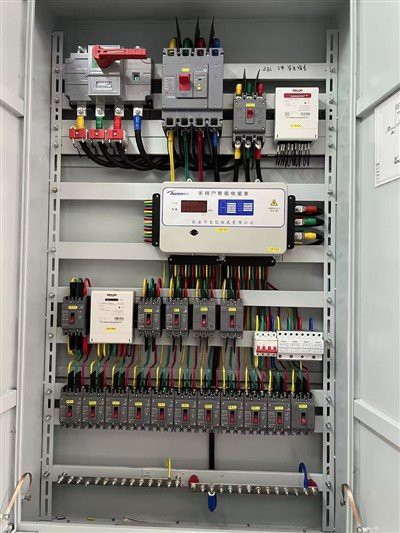
First, let’s get one thing straight: commissioning starts long before the box leaves the factory floor. Most clients wait until the delivery date to start planning, but that’s a mistake. Your distribution box is custom-built to fit your site’s load requirements, so aligning on specifications early eliminates costly reworks. I’ve had a client in the Midwest order a box with a 1,200-amp main breaker, only to realize his new assembly line would push 1,500 amps within 18 months. Changing that breaker after installation meant ripping out cabling and rewiring, adding 10 days of downtime and $22,000 in extra costs. How do you avoid that? Start with a load study, not a price tag. A proper load analysis includes your peak demand, future expansion plans, and the type of equipment you’re powering—motors, servers, lighting, all of which have different start-up surges and continuous load needs. For example, a data center’s distribution box needs to account for 200% of peak transient loads to handle server start-ups, while a municipal water treatment plant needs to account for seasonal pump surges.
Next, work with a supplier that doesn’t just sell boxes, but provides documentation that makes commissioning and compliance easy. When we ship a distribution box to a client, we include a full set of as-built drawings, component test reports, and a material safety data sheet (MSDS) for every part inside. Too often, suppliers cut corners on this, leaving clients with stacks of generic papers that don’t match the actual box. Last year, a small manufacturing client bought a box from a generic supplier and had to pay an electrician $3,500 just to trace the wiring because the schematics didn’t match. Before the box even arrives at your site, confirm with your supplier that they’ll provide a pre-delivery inspection (PDI) report. That report proves every component was tested at the factory: breakers trip at the correct voltage, busbars are torqued to specification, insulation is intact. A PDI isn’t a formality—it’s your first line of defense against manufacturing defects. We once found a loose busbar connection during our in-house PDI for a client’s box, and fixed it before shipping, avoiding a potential failure at start-up.
Once the box is delivered, the next step is pre-installation site preparation. This is another area that trips clients up (pun intended). You can’t set a 3,000-pound steel distribution box on a wobbly concrete pad. It needs a level, reinforced foundation that can support its weight, with proper drainage to prevent water damage—even if your site is in a dry climate. I’ve seen boxes rust from the bottom up because a crew installed it without sloping the foundation to direct water away. You also need to make sure there’s enough clearance around the box for service access. National Electrical Code (NEC) and IEC standards require 30 inches of front clearance for boxes rated over 600 volts, and 18 inches on the sides. Last quarter, a construction team for a new hospital installed a box in a narrow corridor, forcing their electricians to work in tight quarters during commissioning, doubling the time it took to test. Before the box is unloaded, measure the space, confirm the foundation is level, and clear any overhead obstacles—distribution boxes often have to fit under ceiling beams or near overhead cranes, so you don’t want to unload it only to find it can’t fit through the door.
Now, we get to the actual commissioning process, which has four core phases: visual inspection, low-voltage testing, high-voltage testing, and operational validation. Let’s walk through each step, because skipping any one is a risk.
First, visual inspection. This isn’t just looking for dents (though that’s important). Check all exterior panels: are they tight, sealed, and free of rust or scratches? Inspect the wiring inside: conductors should be correctly sized, labeled, and secured with cable ties that are rated for high temperatures. Look for any loose hardware—busbar connections, breaker mounting screws, ground lugs. One of the most common safety hazards we see is improperly torqued ground connections. A loose ground lug can lead to a fault current that doesn’t trip the breaker, putting personnel at risk. We always recommend using a torque wrench during this phase, and referencing the supplier’s specifications for torque values—don’t guess.
Next, low-voltage testing. This is where you test the control and auxiliary circuits, which are the “brains” of your distribution box. First, disconnect all main power inputs to the box—never test low-voltage with high power connected. Use a multimeter to check continuity on all control circuits: from the breaker trip coils to the indicator lights, transfer switches, and any communication modules (like Modbus or SCADA systems for remote monitoring). Test the overcurrent relays to make sure they trip at the set current rating—if a relay is calibrated wrong, a 1,000-amp circuit breaker might trip at 800 amps, wasting power, or not trip at all during a fault. If your box has a transfer switch, test it manually first, then automatically, to confirm it switches between main and backup power in the correct time frame (most facilities need that to happen in less than 10 seconds to avoid downtime). We had a client in Texas last year who skipped low-voltage testing for his backup transfer switch, and when the main power went out, it took 2 minutes to switch over—costing him a full shift of production. That’s a $100,000 mistake he won’t make again.
After low-voltage testing passes, move on to high-voltage testing. This is the phase that ensures the box can handle the power it’s rated for, and it’s non-negotiable for safety. Again, only do this with a licensed electrician or a third-party testing professional with experience in high-voltage work. The main tests here are insulation resistance testing and dielectric withstand testing. Insulation resistance testing checks that the insulation around conductors is intact and won’t break down under power. Use a megohmmeter set to 1,000 volts for low-voltage components and 2,500 volts for high-voltage sections; readings should meet or exceed the manufacturer’s specifications. Dielectric withstand testing (often called a “hi-pot test”) applies a higher-than-normal voltage to the box for a short period, typically 1 minute, to catch any hidden flaws in insulation or wiring. This test is stressful, but it’s necessary—we’ve seen boxes pass all other tests, only to fail a hi-pot because a piece of debris was left inside during manufacturing, causing a short.
Once both low and high voltage testing pass, you’re ready for operational validation. This is where you connect the main power and put the box through its paces. Start with a partial load test: connect 50% of your total load to the box, run it for 4 hours, and monitor temperatures at busbars, breakers, and wiring connections with a thermal camera. Overheating is one of the leading causes of distribution box failure, and it often happens at connections that look tight but aren’t. If a connection runs 10 degrees hotter than the manufacturer’s maximum (usually 140°F), shut down the power and re-torque that connection. Next, run a full load test: connect 100% of your load, plus 10% extra to account for future expansion, and run the system for 24 hours. Monitor for any unusual noises, flickering lights, or tripping breakers that don’t make sense. During this phase, test all safety features: emergency stop buttons, arc flash protection, and fault indication alarms. Arc flash is a real hazard in high-voltage systems—we always remind clients to have proper PPE for any work near the box during testing, even if you think the power is off. I once got a call from a client who forgot to lock out a breaker during testing; a sudden fault caused an arc flash that burned his electrician’s arm. It’s a reminder that safety isn’t a step you check off—it’s something you live through every test.
After operational validation, document everything. This isn’t just for your records—it’s for future maintenance, code inspections, and any upgrades you’ll need down the line. Keep a commissioning log that includes all test results, torque values, thermal readings, and any adjustments made during the process. Make sure this log is part of your box’s permanent file, and that it’s stored in a place that’s easy to access for your maintenance team. When we work with clients, we not only provide the as-built documents, but we also offer a full training session for their in-house team on how to operate, basic troubleshooting, and when to call for professional service. Too often, clients get their box up and running, and then forget how to reset a breaker or read a fault code, leading to unnecessary service calls.
Now, let’s talk about common mistakes I see clients make during commissioning, so you can avoid them. The first is cutting corners on third-party testing. Some clients try to test the box themselves, using tools that aren’t calibrated for high voltage. Calibration matters—if your multimeter is off by 5%, your low-voltage test results are unreliable. Second, ignoring future needs. I mentioned the client who ordered a box with too low an amperage to account for expansion, but I’ve also had clients order a box rated for 2,000 amps when they only need 1,000, wasting $15,000 on overcapacity that they’ll never use. Work with your supplier to find the sweet spot between current needs and future growth. Third, not locking out/tagging out (LOTO) during testing. This is a OSHA requirement for a reason—every year, hundreds of workers are injured or killed by accidental power activation during maintenance or testing. Fourth, skipping post-commissioning follow-up. After you turn the box over to your team, do a 30-day check-in. Pull thermal images again, run a load test, and make sure no connections have come loose. Vibration from heavy machinery, temperature changes, and humidity can cause connections to shift in the first month of operation.
As your high-voltage distribution box supplier, our goal isn’t just to sell you a cabinet—it’s to make sure that box powers your operation for 20+ years without issues. That’s why we stay with our clients through every step of the process: from the initial load study, to factory testing, on-site commissioning support, and long-term maintenance resources. We’ve built this business on repeat clients—manufacturers that come back when they’re expanding, data centers that need redundant systems, and municipal teams that trust us with their public power infrastructure. The best part of my job isn’t selling a new box—it’s getting a call a year later saying that box is working better than they expected, and they want to order another for their new facility.
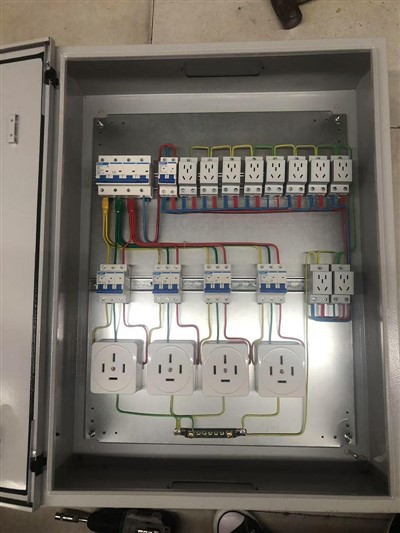
If you’re planning to commission a high-voltage distribution box for your site, whether it’s a new installation or a replacement for an old, failing system, the time to act is now. Don’t wait until your current box fails and causes unplanned downtime. Reach out to our team to discuss your specific needs—we’ll walk you through the load study, specification process, and commissioning steps, and provide all the support you need to get your box up and running safely and efficiently. We’ll answer all your questions, no matter how small, and make sure you have the information you need to make the right decision for your operation. Don’t let a avoidable mistake turn a simple installation into a costly disaster. Connect with us today to start the conversation, and let’s build a power distribution system you can rely on.
Tertiary Distribution Box References:
- National Electrical Code (NEC), Article 450: Transformers and High-Voltage Distribution Equipment
- International Electrotechnical Commission (IEC) 61439: Low-Voltage Switchgear and Controlgear Assemblies
- Occupational Safety and Health Administration (OSHA) 29 CFR 1910.331-335: Electrical Safety-Related Work Practices
- Underwriters Laboratories (UL) 845: Standard for Safety for Motor Control Centers and High-Voltage Distribution Assemblies
Anhui Nanxian Electric Co., Ltd.
With abundant experience, we are one of the most professional high-voltage distribution box manufacturers and suppliers in China. We warmly welcome you to buy advanced high-voltage distribution box for sale here and get quotation from our factory. All customized products are with high quality and low price.
Address: Factory Unit 03-2, Building 21, Feidong Yinfeng Industrial Park Co., Ltd., Northeast Corner of Manquan Road and Changle Road, Hefei Circular Economy Demonstration Park, Feidong County, Hefei City, Anhui Province.
E-mail: 541580567@qq.com
WebSite: https://www.nxelepower.com/
