Hey there! I’m in the business of supplying Tantalum Precision Parts, and you know what? One question that often pops up is, "Do Tantalum Precision Parts have good thermal conductivity?" I thought it’d be cool to sit down and break this down for all you curious folks out there. Tantalum Precision Parts
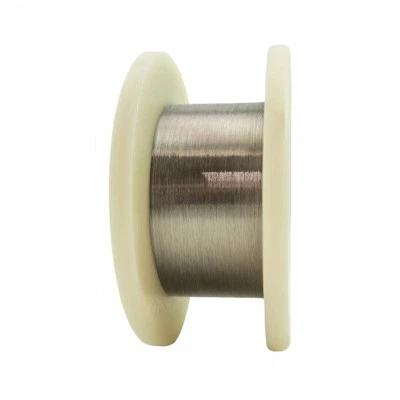
Let’s first get to know a bit about tantalum. Tantalum is a pretty unique metal. It’s super dense, corrosion – resistant, and has some really nifty properties that make it a top – pick in many high – end industries. It’s often used in electronics, medical devices, and even aerospace components. And when we’re talking about precision parts made from this metal, we’re looking at things like tiny screws, pins, and custom – made chunks that need to fit just right and perform under all sorts of conditions.
Now, onto the big question of thermal conductivity. Thermal conductivity is all about how well a material can transfer heat. Think of it like this: if you’ve got a pot on the stove, you want the material of the pot to conduct heat quickly so your food cooks evenly. In the world of precision parts, good thermal conductivity matters a whole lot. It can help in dissipating heat, which is crucial in preventing overheating and potential damage to the equipment.
So, does tantalum hold up in the thermal conductivity department? Well, compared to some other metals, tantalum doesn’t have the highest thermal conductivity. For example, copper is one of the best heat conductors out there. It’s like the gold standard when it comes to quickly transferring heat. Silver is also up there in the rankings. But that doesn’t mean tantalum is a total dud.
Tantalum has a thermal conductivity of about 57 W/(m·K) at room temperature. This might not sound like much when you compare it to copper, which has a thermal conductivity of around 400 W/(m·K). But hey, tantalum has its own set of advantages that might make up for it.
In many applications where tantalum precision parts are used, the ability to handle extreme conditions is key. Tantalum can withstand high temperatures and corrosive environments really well. In electronics, for example, it’s often used in capacitors. While the heat transfer might not be as rapid as copper, the fact that tantalum can stand up to the heat generated over long periods without breaking down is a huge plus.
Let’s take a closer look at some of the industries where tantalum precision parts shine, despite their "so – so" thermal conductivity.
In the medical field, tantalum is used in implants like bone plates and screws. The body generates heat, and these parts need to be able to handle that. The moderate thermal conductivity of tantalum is just fine here because the main focus is on biocompatibility and mechanical strength. You don’t want the implant to get too hot or corrode inside the body. And tantalum is pretty much a rock – star in this regard. It won’t react with the body’s fluids, and it’ll keep the bone together stably.
In the aerospace industry, weight plays a huge role. Tantalum is dense, but its corrosion – resistance and the ability to retain its shape under high temperatures are more important than having the best thermal conductivity. For example, in some aircraft engine components, the precision parts made of tantalum need to be able to handle the extreme heat generated by the engine. Even though the heat transfer might not be as fast as some other materials, the overall performance and reliability of tantalum make it a great choice.
Now, if you’re thinking about using tantalum precision parts in your project and you’re worried about the thermal conductivity, there are ways to work around it. You can pair tantalum parts with other materials that have better thermal conductivity. For instance, you could use a copper heat sink near the tantalum part to help draw the heat away more efficiently. Or you could design your equipment in a way that allows for better natural convection of heat.
Another interesting thing about tantalum is that its thermal conductivity can change a bit depending on the purity of the metal and how it’s processed. Higher – purity tantalum generally has better thermal conductivity. And the way we make the precision parts, like through forging or machining, can also have an impact. At our place, we’ve got a team of experts who know how to optimize these processes to get the best performance out of tantalum.
Overall, while tantalum precision parts might not have the best thermal conductivity in the world, they offer a whole host of other benefits that make them a valuable asset in many industries. The key is to understand your specific needs and see if tantalum is the right fit.

If you’re in the process of sourcing precision parts and you think tantalum might be what you need, I’d love to have a chat with you. Whether you’re working on a small – scale electronics project or a large aerospace endeavor, we’ve got the expertise and the quality parts to meet your requirements. Don’t hesitate to reach out and start a conversation about how we can work together to get you the best tantalum precision parts for your job.
Tungsten Products References
- "Materials Science and Engineering: An Introduction" by William D. Callister Jr. and David G. Rethwisch
- Various industry research papers on the properties of tantalum and its applications in different fields.
Address: Wangjing Science and Technology Park, Guangshun North Street, Chaoyang District, Beijing
E-mail: sales@moly-tungsten.com
WebSite: https://www.moly-tungsten.com/
