If you’ve ever grabbed a soft hoodie on a lazy Sunday morning and then stretched a cotton tablecloth to set a full meal, you’ve probably asked the same question I get from clients all the time: Are knit garments more stretchy than woven ones? As a supplier who works with both knit and woven garments every single day, I’ve spent years watching fabric behave in sample rooms, production floors, and retail fit tests—and the short answer is yes, but not for the reason most people assume. Stretchy-ness isn’t just a property of the fiber itself; it’s in how the fabric is built, and that’s where the biggest differences between knits and woven fabrics show up. Knit And Woven Garments
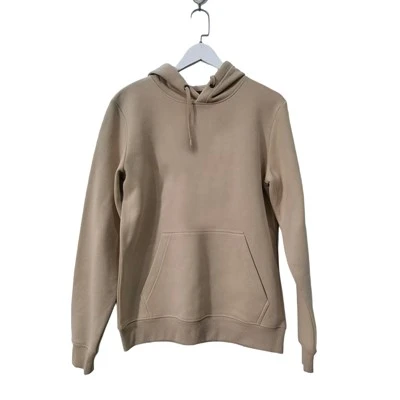
Let’s start with the basics you can see and feel. When I pull on a cotton knit tee, it gives easily across the chest and shoulders, and even a small tug at the side seam will let me stretch it more than I’d expect before it snaps back. A cotton woven button-up? Try that same tug, and it barely moves at all—until you pull hard enough that a seam starts to strain, not the fabric. That difference boils down to the structure of each fabric, not just the fiber. Woven fabrics are made by interlacing two sets of yarns: the warp, which runs vertically along the length of the roll, and the weft, which runs horizontally across the width. Those yarns go over and under each other in a tight, grid-like pattern, so they can’t shift much. There’s no give there—they’re locked in place. Knit fabrics, though, are made by looping a single yarn (or multiple yarns, depending on the stitch) back and forth to create rows of interlocked loops. Those loops can slide and stretch, and they can bend in ways that woven yarns never can. That’s why a knit can stretch 20 to 50 percent across its width, while a woven cotton is usually only 3 to 10 percent stretchy at most—if it’s stretchy at all.
I’ve seen this play out so many times in custom orders. A brand will come to me wanting a knit activewear legging, and we’ll spec a spandex-blend jersey that stretches 40 percent, perfect for movement. The same brand might also want a woven pant for office wear, and we’ll stick to a twill that only stretches 5 percent, so it holds its sharp shape all day. But here’s the thing: stretch depends on more than just fabric type. The stitch used in knits matters too. Rib knit, like the kind on a sock cuff or a hoodie hem, has vertical rows of loops that interlock tighter, so it stretches more in the width than in the length. Jersey knit, the stuff of tees and loungewear, is a plain knit with a looser loop structure, so it gives more evenly in all directions. Woven fabrics, on the other hand, can be engineered to stretch too—though not in the same way. Stretch woven fabrics use things like elastic yarns woven into the weft, or a twill weave with a slightly looser interlace, but even the best stretch woven rarely hits the stretch of a good knit. I once tried a stretch woven blend for a casual pant that the client swore would move like a knit, and it still only stretched half as much as a standard cotton knit tee. It looked soft, but when someone sat down for a long meeting, it pulled tight across the thighs in a way that knit never would.
Another big factor is recovery—how well a fabric goes back to its original shape after being stretched. That’s just as important as stretchiness for garments, right? No one wants a hoodie that’s too baggy after one wear, or a legging that slips down because it won’t spring back. Here again, knits usually have the upper hand, especially when they use elastic fibers. A spandex-blend knit will stretch out to that 40 or 50 percent mark, then snap right back. Wovens, even stretch woven, often have worse recovery. The interlaced warp and weft yarns can get permanently misaligned when stretched hard, so a woven pant might end up with baggy thighs after a few wears, while a knit legging stays true to its shape. I remember a client who switched from knit to stretch woven for their best-selling joggers to save on cost, and within a month, they were getting so many complaints about sagging knees that they switched back. That’s the real-world test: stretch is only useful if it comes with good recovery.
But wait—does that mean knits are always better? No, and I tell that to every client who asks. Wovens have their own perks, and stretch isn’t the only thing that matters. Wovens hold their shape longer, resist wrinkles more (depending on the fiber), and have a crisper look that’s perfect for dress shirts, blazers, or tailored pants. Knits, though, are made for comfort and movement. Think about it: you don’t see many woven activewear tops, do you? That’s because stretch is non-negotiable for sports. But when a brand wants a tailored blazer, they reach for a wool or polyester woven—they don’t want it to stretch, because they want it to look sharp and structured.
I’ve also noticed a common misconception among small brands who are just starting out: they think all stretchy fabrics are knit, but there’s a middle ground. Lately, we’ve been doing a lot of custom stretch woven blends for brands that want the look of a woven shirt with a little more give, or stretch woven denim for jeans that move without feeling baggy. But even with that, the vast majority of stretchy garments in my portfolio are knit—from loungewear and activewear to socks and underwear. A few years back, a big athleisure brand approached me to develop a new line of high-waisted leggings, and after testing 12 different fabric blends, 9 of them were knit, and only 1 was a stretch woven, and that one was limited to a small run because it didn’t hold up as well in wash tests.
Wash tests are another place where fabric structure shows its true colors. When a knit garment goes in the washing machine, those loops can relax a little, which might make it feel looser over time. That’s why we always advise clients to tell their customers to lay knits flat to dry, or use a low-heat dryer to prevent shrinkage. Wovens, on the other hand, hold their shape better in the wash, since the interlaced yarns don’t shift as much. But for stretch, the knit’s loop structure just doesn’t have a rival. I once had a sample of a 95% cotton 5% spandex knit that I stretched to its limit—so far that the spandex strands started to strain—and it still bounced back. A woven with the same spandex content? It broke, because the warp and weft yarns pulled apart before the spandex could give. That’s the key difference in structure: knits rely on interlocked loops that can move as a unit, while wovens rely on interlaced yarns that can’t shift much without breaking.
Let’s talk about fibers for a second, because that ties into stretch too. A lot of people think stretch comes from synthetic fibers like spandex, and while that’s true for most high-stretch knits, natural fiber knits (like cotton knits) are still more stretchy than natural fiber wovens (like cotton twill). A 100% cotton jersey knit will stretch about 15-20 percent, while 100% cotton woven will only stretch around 5 percent. Even without synthetic fibers, the knit’s loop structure gives it more give. That’s why old cotton tees from the 90s—100% cotton, no spandex—used to stretch so much and still come back, while a 100% cotton woven button-up from that same era barely moves. Synthetic fibers do add more stretch, though. A polyester knit with 10% spandex will stretch 30-40 percent, and a nylon knit with spandex can hit 50 percent stretch, perfect for swimwear or activewear.
I’ve been in this business for 18 years, and I’ve seen every kind of fabric problem: a knit tee that stretched too much, a woven shirt that tore at the seam when someone raised their arms, a pair of knit pants that lost their shape after 3 wears. All of these problems come down to understanding the structure, not just the fiber. If you’re designing a garment that needs to move—activewear, loungewear, socks, underwear—knit is going to give you more stretch and better recovery. If you’re designing something that needs to hold its shape—tailored clothing, dress shirts, blazers, denim—woven is the way to go, even if you add a little stretch to it.
What I tell clients when they come to me is: don’t just ask which is more stretchy. Ask what the garment is for. A yoga legging needs stretch, so we’ll go with a high-stretch knit. A business shirt needs to look crisp, so woven is better, and if you want a little give, we’ll add a small amount of spandex to the weave. I’ve also found that mixing the two works sometimes—like a woven front panel on a knit hoodie, so the chest holds its shape while the rest of the hoodie is soft and stretchy. That’s a common design now, and it’s a middle ground that gives clients the best of both.
At the end of the day, the answer to “Are knit garments more stretchy than woven ones?” is mostly yes, but it’s not an absolute. It’s a rule of thumb, based on the way each fabric is constructed, which is why as a knit and woven garments supplier, I spend so much time testing samples, adjusting stitches, and tweaking weaves. I’ve seen woven fabrics engineered to stretch almost as much as knits, and knits made to be almost as stiff as wovens. But when you compare them side by side, for general-purpose stretch and recovery, knits are still the go-to for most garments that need to move.
If you’re a brand looking to develop a new line, or a designer who needs help picking the right fabric for a garment, don’t second-guess it. Reach out to us to discuss your project, and we’ll walk you through the best options for stretch, shape, and durability.
Sun Protective Clothing References
- Textile World. (2021). Fabric Structure and Its Impact on Stretch and Recovery in Apparel. Textile World Publications.
- Hunter, L. (2019). Knit vs. Woven Fabrics: Performance Differences in Active Apparel. Journal of Textile and Apparel Technology and Management.
- Woolman, J. (2020). Stretch Properties of Woven and Knit Blends: A Comparative Analysis. Textile Research Journal.
Yancheng Dezhiwang Garments Co., Ltd.
As one of the most professional knit and woven garments manufacturers and suppliers in China, we also support customized service. We warmly welcome you to wholesale bulk high quality knit and woven garments in stock here from our factory. For price consultation, contact us.
Address: No. 1, Xinglong Road, Xinqiao Village, Fucheng Subdistrict, Funing County, Yancheng City, Jiangsu Province, China
E-mail: ntchenguangxi@163.com
WebSite: https://www.dzwoutdoor.com/
